


How to Properly Use Your Emergency Brake: A Helpful Guide for New Drivers
Learning to drive comes with many small habits that make a big difference. Checking your mirrors. Signalling early. Leaving enough space. And one that often gets overlooked? Using your emergency brake.
Also called a parking brake, handbrake, or e-brake, this system keeps your vehicle securely in place when parked. It can also act as a backup in some emergencies. However, you shouldn’t use it as a replacement for your regular brakes.
For new drivers, knowing how to use the emergency brake can protect your vehicle and reduce strain on your transmission. It’ll also give you more confidence when parking in tricky environments.
Let’s walk through what it does, when to use it, and the proper way to engage your emergency brake.
What Is an Emergency Brake?
Your emergency brake is a secondary braking system in your vehicle.
Your regular brakes are the ones you use every time you press the brake pedal. They slow down and stop your vehicle while you drive.
The emergency brake operates independently of the main braking system. Its main job is to keep your vehicle from moving once you park it. That’s why many people call it the parking brake.
The name “emergency brake” can be a little confusing. While it can slow your vehicle if the main brakes fail, it’s mostly used for parking today. It’s especially useful on hills or uneven ground.
Where Is the Emergency Brake?
If you’re wondering where the emergency brake is, it depends on your vehicle. Most vehicles have one of these common styles:
Centre Handbrake Lever
This is the classic handbrake style. It’s usually in between the driver and front passenger seats. To use this type of emergency brake, pull the lever up until it feels secure. To release it, you usually press the button at the end of the lever and lower it.
Foot Pedal Parking Brake
Some vehicles have a small pedal on the far left side of the driver’s footwell. You press it down to engage the parking brake. To release it, you may pull a release lever or press the pedal again, depending on the car.
Electronic Parking Brake
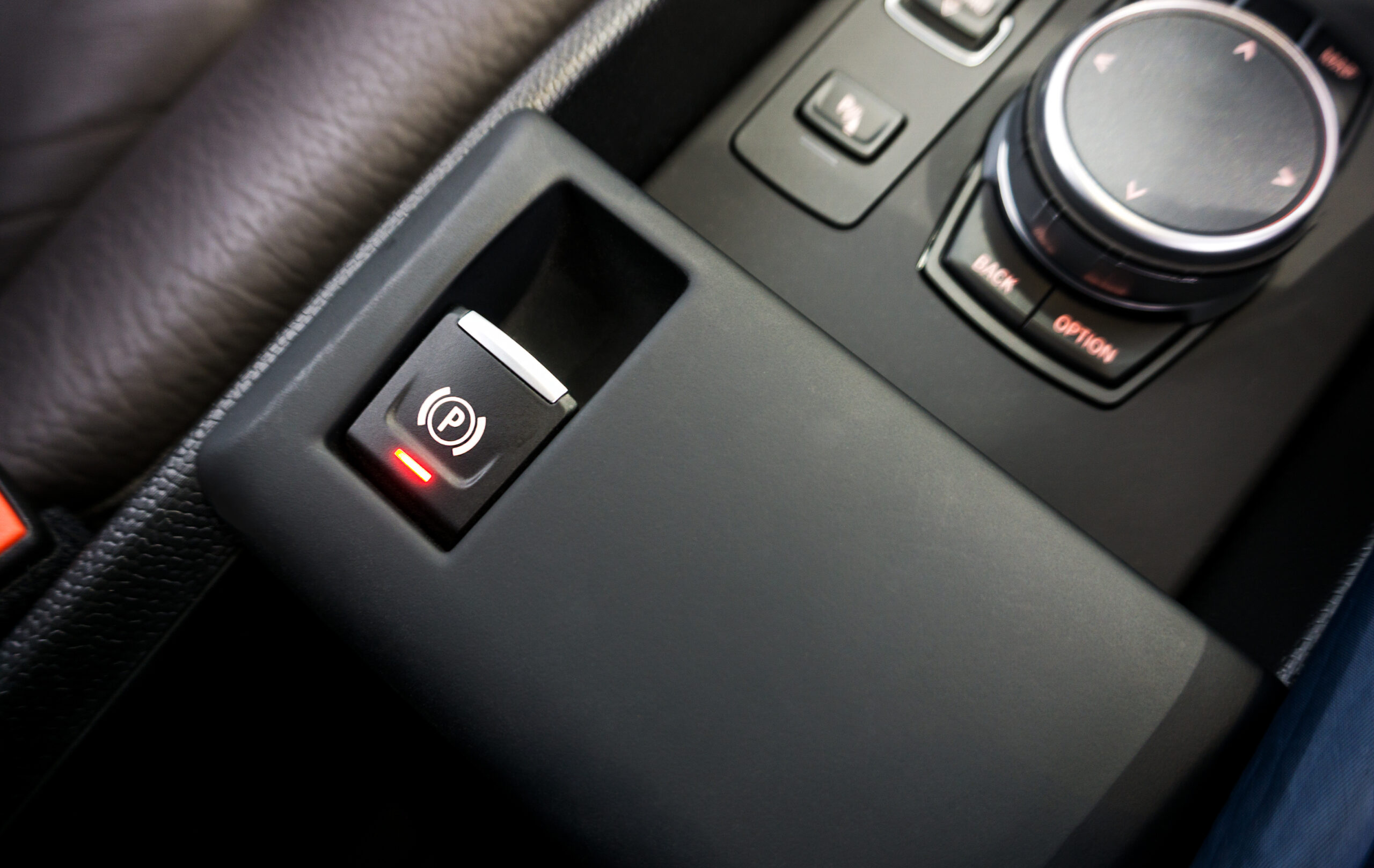
Many newer vehicles use a button or switch instead of a lever or pedal. You’ll likely find this near the gear selector or on the dashboard. In this version of an emergency brake, the button can display “P” or “Park,” or show a parking brake symbol.
If you’re not sure which type your vehicle has, check your owner’s manual or ask a technician to show you.
When You Should Use Your Emergency Brakes
Parking
As we mentioned, using your emergency brake when you park has become common practice. In fact, when you take driving lessons, your instructor will likely teach you about when it’s essential.
It’s especially important in cities with steep hills, such as Vancouver, North Vancouver and New Westminster. If you don’t use your parking brake, it could lead to serious accidents and liability issues.
This is particularly important for those who drive manual vehicles that can be parked in neutral. However, even cars with automatic transmissions can still roll a few inches if you don’t use the handbrake. This not only compromises security but also puts excessive strain on your gears.
For these reasons, we always recommend using your emergency brake when parking your car.
When You Are Working on Your Car
Another situation in which you should use the emergency brakes is during car maintenance.
Whether you’re changing a flat tire, checking under the hood or working underneath the vehicle, engaging your emergency brake will prevent your car from rolling unexpectedly. This will reduce the risks of accidents and ensure a safe operation.
During Emergencies
As the name suggests, emergency brakes can also be used for emergencies. However, this should be done with caution, as rapidly pulling your handbrake while moving may cause your car to spin.
If your primary brakes are not responding, pull the emergency brake gradually until you come to a complete stop. This may not be possible, however, in vehicles with electronically activated parking brakes controlled by a button.
How to Properly Use Emergency Brakes
When it comes to parking, knowing when to pull your handbrake is fundamental to prolonging your vehicle’s lifespan. While many drivers put their cars in park and then apply the emergency brake, this shouldn’t be done in that order.
To prevent wear and tear on your transmission, you should always pull your handbrake before shifting into park. Here’s what you should do:
- Press the brake pedal until you come to a complete stop, and keep your foot on it.
- Shift to neutral to remove pressure from the transmission.
- Pull the handbrake until you feel resistance.
- Shift your transmission into park.
That may feel like a lot at first, but once you get used to it, it becomes a quick routine. Your Trusted Auto Repair Centre in North Vancouver
Need Your Brakes Checked?
Your emergency brake is part of your vehicle’s safety system, and it should work properly when you need it.
If your parking brake feels loose, sticks, doesn’t hold the vehicle, or you’re not sure how to use it, Minit-Tune & Brake Auto Centres can help. Our technicians can inspect your braking system, check your parking brake, and help you keep your vehicle safe for everyday driving.
Book a brake inspection or maintenance appointment with Minit-Tune & Brake Auto Centres today.
Related posts
Read More
Battery vs. Alternator: How to Tell Which One Is Actually Failing in the Cold
Learn how to tell whether a cold-weather no-start is caused by the battery or the alternator, and when to have both tested.
Read More
How Long Do Wiper Blades Actually Last? Signs You’re Overdue for New Ones
Learn how often to replace wiper blades, spot signs of wear, and understand why even new blades can skip. Get practical tips before fall rain arrives.
Read More
Winter Tires vs. All-Season vs. All-Weather Tires in BC: What the Law Requires (and What They Cost)
A plain-language guide to what BC's winter tire regulation requires on designated highways, how all-season, all-weather and winter tires compare, and what a seasonal swap or a second set typically costs.